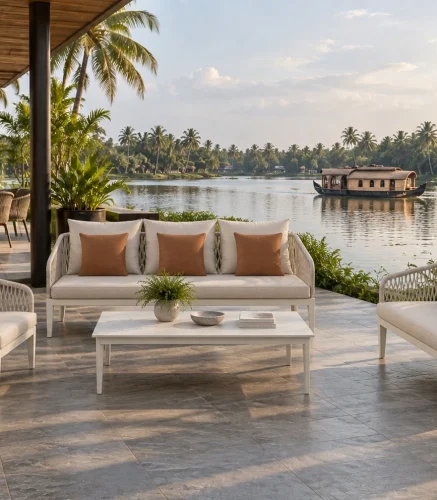
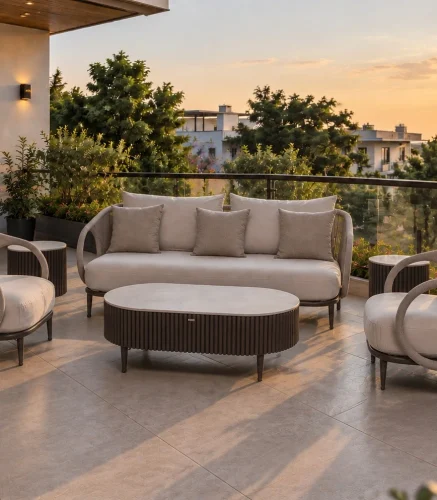
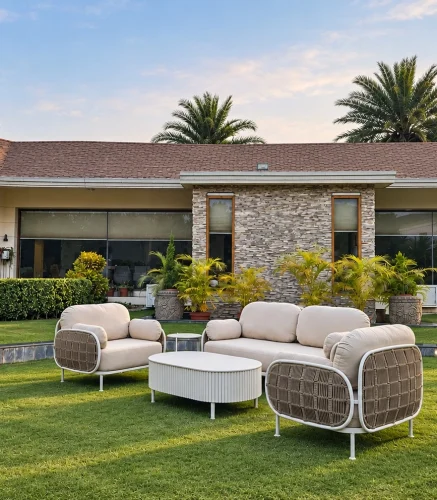
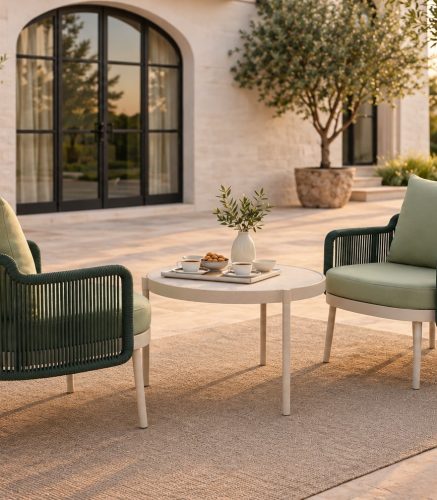
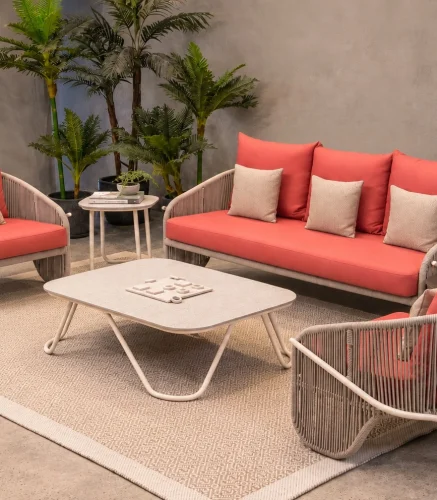
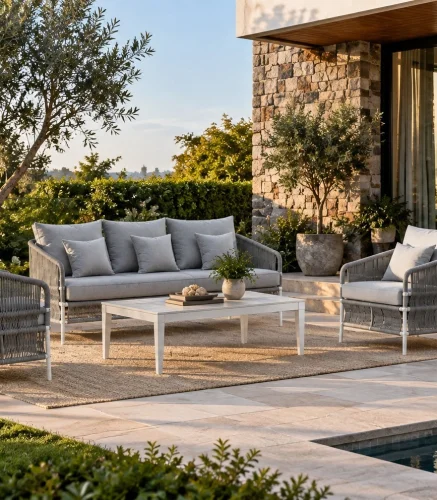
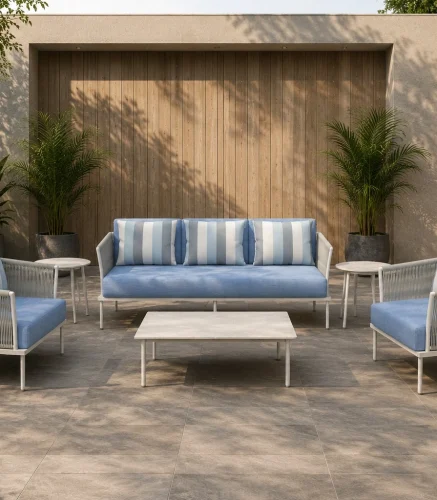
A family in Gurugram once described their outdoor sofa set purchase to a designer this way. They picked the one that looked best in the showroom photograph, and had it delivered. Within eight months, the cushions had gone flat. The fabric had faded on one side. Two of the legs had started to rust where the powder coating had chipped during transport. Nothing about the sofa was defective in an obvious way. It simply did not suit outdoor conditions, even though the seller had sold it as outdoor furniture.
This is a common story, and it points to a real gap in how outdoor sofa sets are usually bought. Most buyers judge them the way they would judge an indoor sofa: by shape, colour and price. But an outdoor sofa set lives through sun, rain, dust and temperature swings that indoor upholstery never has to face. The criteria that matter, therefore, are different. Here is what is worth checking before signing off on one.
Frame Materials: The Part That Determines Lifespan
The frame decides how long the sofa set will actually last, more than any other single factor. Aluminium is the most common choice for contemporary outdoor sofa sets, and for good reason. It does not rust the way ferrous metals do. It stays light enough to rearrange without help. When properly powder coated, it holds its finish through years of sun exposure. The quality difference between one aluminium frame and another usually comes down to two things: wall thickness and the pretreatment applied before powder coating, not the metal itself.
Teak remains popular for a warmer, more traditional look, particularly in farmhouses and resort settings. It weathers naturally to a silver grey tone unless owners oil it regularly, and it needs periodic maintenance to stay looking new. Buyers who want a low maintenance product usually lean towards aluminium or a synthetic weave over a metal frame instead.
Steel and wrought iron still suit heavier, more ornate designs. However, they need a genuine anti corrosion coating system to survive an Indian monsoon. Exposed steel, after all, corrodes far faster than aluminium once the coating scratches.
Cushions, Fabric and Foam
This is where many outdoor sofa sets begin to fail, even when the frame is still perfectly usable. Buyers should select outdoor upholstery for UV resistance, weather exposure and regular cleaning, not simply because it feels premium in a showroom. Performance fabrics, including solution-dyed outdoor textiles, retain their appearance better under prolonged sun exposure and everyday outdoor use.
The cushion construction matters just as much as the outer fabric. Materials built specifically for outdoor conditions should handle regular use, changing weather and routine cleaning without becoming a constant maintenance concern.
For GEBE, this is the difference between two kinds of furniture. One only looks luxurious on day one. The other stays comfortable, serviceable and easier to maintain over years of outdoor use.
Modular Versus Fixed Configurations
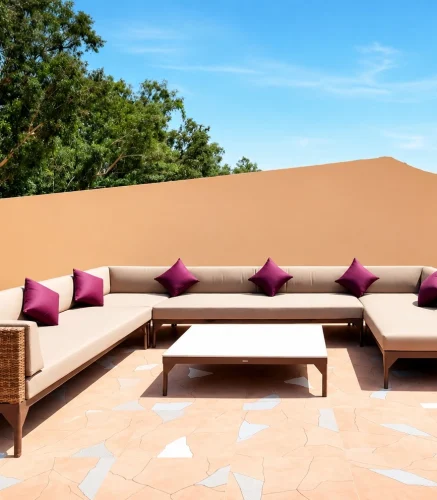
Modular outdoor sofa sets let owners rearrange individual seating units into L-shaped, U-shaped or straight configurations. This flexibility works well for larger terraces, lawns, poolside areas and hospitality spaces. The seating layout there may change for different occasions or requirements. Fixed configurations work better when the seating position is unlikely to change. They particularly suit balconies, compact terraces and defined seating areas, where a consistent layout makes better use of the available space.
The better choice depends less on which configuration looks more impressive. It depends more on how the outdoor space will actually be used. A well-planned layout should provide comfortable movement, practical seating capacity and enough flexibility for the way the space is used over time.
Sizing for Balconies, Terraces and Lounges
A three-seater sofa that feels proportionate in a large resort lounge can easily overwhelm a compact apartment balcony. Before selecting a set, measure the actual usable floor area, not just the overall dimensions of the balcony or terrace.
Allow enough space around the furniture for comfortable movement, doors to open freely and easy access to the seating. The goal is to create a layout that feels comfortable without making the outdoor area feel crowded. For compact balconies, a two-seater paired with an accent chair or side table can often use the available space more effectively. A larger sofa set, by comparison, uses it less efficiently. Spacious terraces, gardens and hospitality lounges, by contrast, can accommodate larger arrangements, including modular seating, coffee tables and complete conversation sets.
The right outdoor furniture should fit the space comfortably while still leaving enough room to move, sit and use the area naturally.
Residential Versus Hospitality Outdoor Furniture Specifications
An outdoor sofa set for a private home and one for a hotel, resort or restaurant may look similar. However, the way they get used can differ a great deal.
Residential outdoor furniture typically serves a smaller number of people. Hospitality outdoor furniture, in contrast, may see frequent daily use, repeated cleaning and constant movement by guests and staff. For these spaces, material selection, frame construction, outdoor fabrics and overall serviceability become especially important.
When specifying outdoor furniture for hotels, resorts and restaurants, architects and procurement teams should look beyond appearance alone. They should evaluate material specifications, suitability for outdoor exposure, cleaning requirements, warranty terms and after-sales service before finalising the furniture.
For residential projects, the same principles still matter, particularly for exposed balconies, terraces and gardens. The difference is that furniture selection should follow the actual intensity of use, location and level of weather exposure.
Whether residential or hospitality, buyers should not judge outdoor furniture only by how it looks in a showroom. Instead, they should choose it for how well it can support the way the space will actually get used over time.
Global Design Influences
A small group of international brands has shaped outdoor sofa design substantially over the past two decades. Dedon popularised woven synthetic fibre lounge furniture as a design category in its own right. Caneline built a strong reputation around Scandinavian minimalism combined with all weather materials. Roche Bobois and B&B Italia both built their reputation primarily on indoor furniture. Both have since extended their design languages into outdoor collections that borrow from contemporary sculptural forms. Brown Jordan, with a long history in outdoor furniture manufacturing, helped establish many of the engineering standards the category still references today. Readers researching design direction for a project often find it useful to look at how these brands approach form and material. This applies even when sourcing locally.
GEBE Luxe designs its sofa sets around similar performance material principles. These include leather free upholstery and serviceable frames rather than disposable ones. Fabrics chosen for washability round out the list, which keeps maintenance simple across both residential and hospitality settings.
Maintenance Expectations
Even a well-built outdoor sofa set benefits from simple, regular care. Owners should clean frames periodically to remove accumulated dust, dirt and residue after heavy rain. Outdoor fabrics and cushions, meanwhile, need cleaning according to the recommended care instructions.
During prolonged periods of limited use or extreme weather, keeping the furniture clean helps maintain its appearance and comfort. Following the appropriate care guidelines matters just as much. Owners should also inspect modular furniture periodically to ensure that connectors and fittings remain secure.
Good outdoor furniture maintenance should not become a constant task. Choosing weather-suitable materials, serviceable construction and easy-to-maintain finishes from the beginning can significantly simplify long-term ownership.
For detailed guidance on looking after different outdoor furniture materials, refer to the GEBE Care and Maintenance guidelines.
Readers who would like to explore outdoor furniture in person can visit the GEBE Luxe store locations page to find current showroom information. For help with product selection, space planning or project requirements, the GEBE team can also be reached through the Contact Us page.
Frequently Asked Questions
Is aluminium or teak better for an outdoor sofa set in India?
Aluminium generally needs less maintenance and resists rust better across humid and coastal climates. Teak, meanwhile, offers a warmer traditional look but requires periodic oiling to prevent greying and surface cracking. The right choice depends on how much upkeep the buyer is willing to commit to.
How do I know if outdoor cushion fabric will actually resist fading?
Ask whether the fabric is solution dyed. This process embeds colour through the fibre rather than on the surface. It is what genuinely slows fading under sun exposure, rather than a general water resistant label.
Are modular outdoor sofa sets worth the extra cost over fixed sets?
They are worth it for spaces that get reconfigured often, such as event lawns or hotel decks. For a fixed balcony or terrace layout that will not change, however, a well made fixed set works simpler to maintain. It also tends to be more cost effective.
What is the difference between residential and hospitality grade outdoor sofa sets?
Hospitality grade sets suit higher daily usage, frequent commercial cleaning and more varied handling. Consequently, manufacturers build frame joints, fabric grade and cushion density to a higher tolerance than furniture intended for occasional home use.
How often should outdoor sofa cushions be replaced?
With proper drainage foam and solution dyed fabric, cushions in most Indian climates can last several years before needing fabric replacement. Coastal and high UV locations, however, may require attention sooner than drier inland cities.