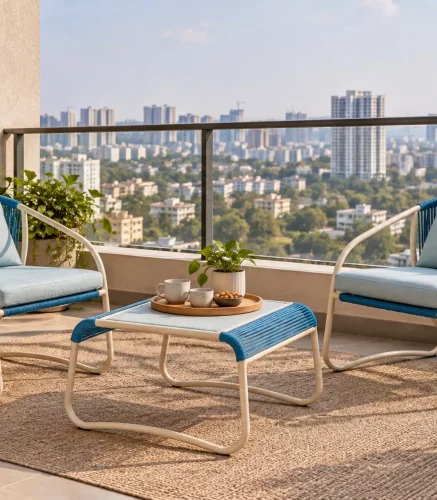
Sunlight was once a natural part of everyday life — and understanding why vitamin D is increasing in urban homes starts here. People woke up with the sun, spent time outdoors, sat in courtyards, walked to places, and naturally rested in open air." Today, however, urban life looks very different.
Vitamin D Deficiency: A Growing Urban Health Problem
Most of our day is spent indoors — inside homes, offices, cars, lifts, malls, and screens. In fact, even in cities filled with sunshine, many people barely step into real sunlight. This change has created a silent but serious health problem: Vitamin D deficiency. And it is, moreover, rising fastest in urban homes.
Vitamin D is produced in the human body when skin is exposed to sunlight, especially UVB rays. While some foods contain Vitamin D, they are nevertheless not enough to meet daily needs on their own.
Global health research shows:
- Over 1 billion people worldwide have Vitamin D deficiency
- Urban populations are at much higher risk
- Sunny countries are not protected from this problem
Medical reviews published on PubMed Central, part of the U.S. National Institutes of Health, confirm that lack of sun exposure caused by indoor lifestyles is one of the main reasons for this deficiency worldwide.
The problem is not the sun. Rather, the problem is how we live.
Vitamin D Deficiency in India: The Shocking Urban Reality
One of the most revealing studies on Vitamin D deficiency comes from India itself. A large community-based study led by Dr. Ravinder Goswami and published in the British Journal of Nutrition by Cambridge University Press uncovered a startling truth:
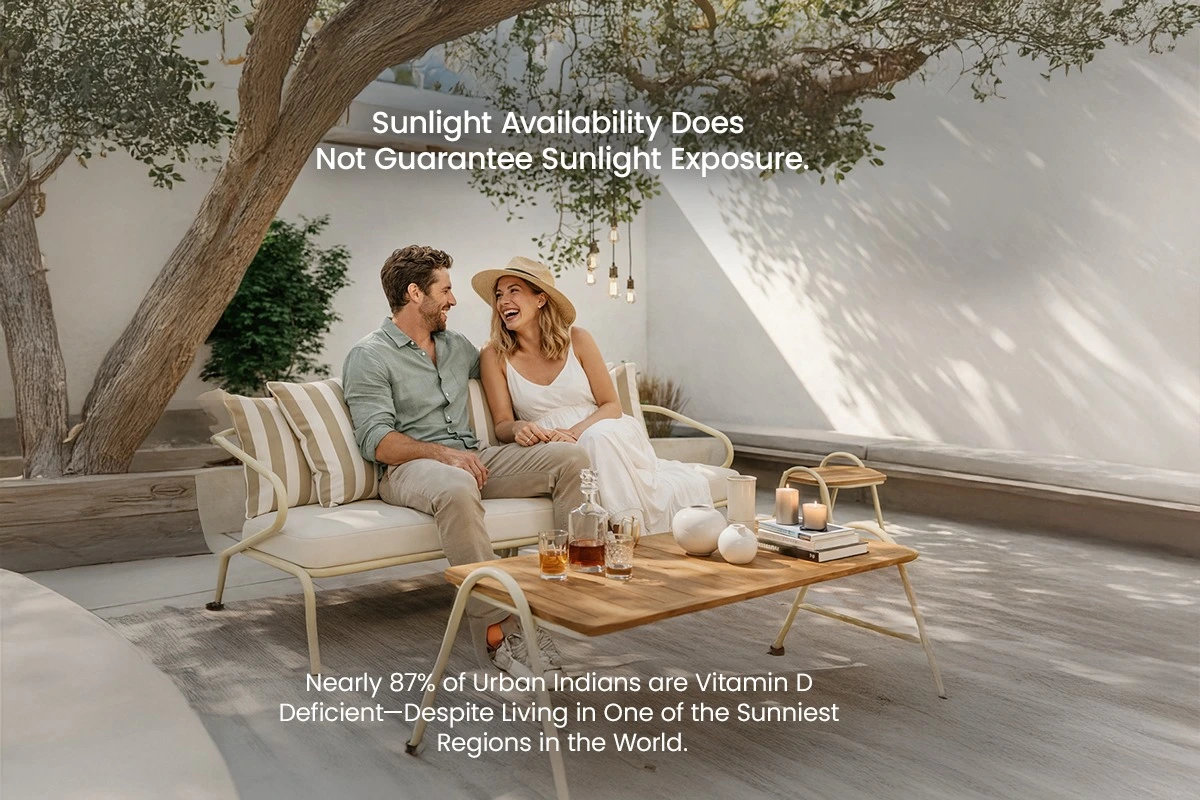
Nearly 87% of urban Indians are Vitamin D deficient—despite living in one of the sunniest regions in the world.
Consequently, this research proves a critical point: sunlight availability does not guarantee sunlight exposure.
The study highlights that:
- Urban lifestyles keep people indoors for most of the day
- Outdoor activity has reduced sharply in cities
- Modern housing and office environments limit direct sunlight
- Cultural habits, work routines, and indoor comfort dominate daily life
What Dr. Goswami’s research highlights is not a failure of sunlight, but a failure of modern living patterns.
Sunlight is available — yet homes and lifestyles no longer encourage people to step into it comfortably or regularly.
The findings confirm that Vitamin D deficiency in cities is not a nutritional issue alone. Instead, it is a lifestyle and design issue.
Why Urban Homes Increase Vitamin D Deficiency
This is a key reason why Vitamin D deficiency is increasing — many urban adults get less than 15 minutes of effective sun exposure per day, which is not enough for healthy Vitamin D production.
1. Most of the Day Is Spent Indoors
A typical urban routine involves:
- 8–10 hours in indoor offices
- Travel in enclosed vehicles
- Indoor entertainment and screen time
- Limited outdoor movement
2. Glass Does Not Help Vitamin D
Modern homes use large glass windows. While they allow brightness, glass blocks UVB rays. Therefore, sitting near a window does not help Vitamin D levels — only direct outdoor sunlight works.
3. Outdoor Spaces Exist—but Are Poorly Used
Balconies, terraces, and shared open areas exist in many urban homes.
However, they are often unused because:
- They get too hot
- Furniture is uncomfortable
- Materials fade, rust, or crack
- Maintenance becomes difficult
When outdoor spaces are uncomfortable, people naturally stay indoors.
Why Vitamin D Is Essential for Everyday Health
Vitamin D plays a key role in:
- Bone and muscle strength
- Immunity and disease resistance
- Energy levels and stamina
- Mental health and mood balance
Low Vitamin D levels are linked to:
- Frequent illness
- Bone pain and weakness
- Fatigue
- Poor sleep and mood changes
For children, it affects growth. Adults experience reduced productivity, while seniors face challenges with mobility and independence.
The Lifestyle Shift: Why Outdoor Living Is Becoming Essential
As health awareness grows, people are rethinking how they live in cities. Consequently, there is a clear lifestyle shift toward outdoor living.
Outdoor living today means:
- Using balconies and terraces daily
- Sitting outdoors for morning tea or coffee
- Spending evenings in fresh air instead of screens
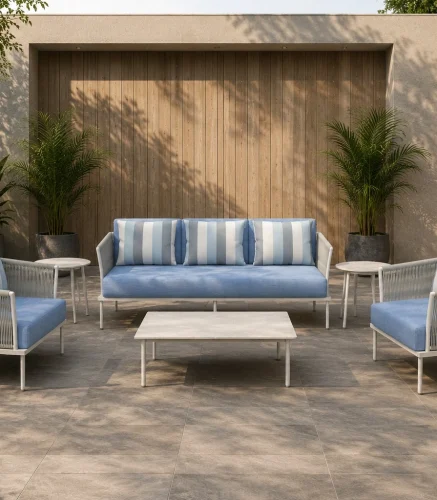
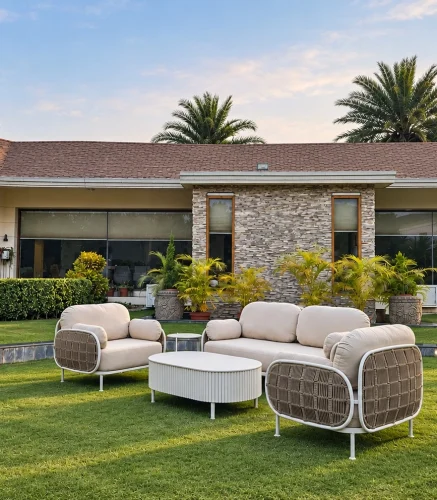
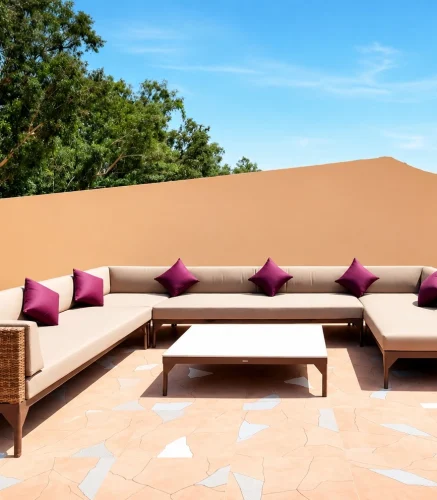
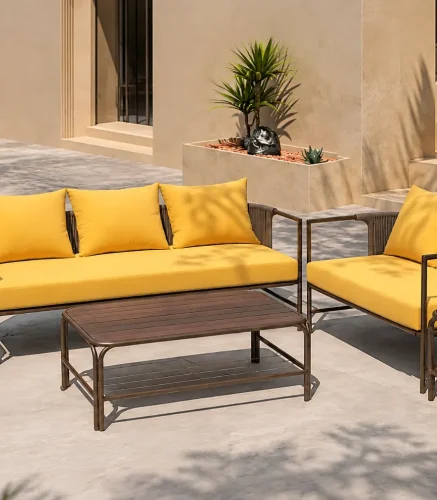
- Creating comfortable seating outside the home
Outdoor spaces are no longer merely decorative — they are becoming essential daily living spaces.
How Outdoor Living Helps Solve Vitamin D Deficiency
• Natural Sun Exposure Without Effort
When outdoor spaces are comfortable and inviting, people use them naturally. Simple daily moments—like having coffee outside in the morning or relaxing outdoors in the evening—bring regular sunlight back into everyday life. This consistent exposure helps the body produce healthy Vitamin D levels without planning or forcing routines. In fact, even 20–30 minutes of sunlight a few times a week can make a meaningful difference.
• Builds a Sustainable Wellness Habit
Outdoor living feels easy and enjoyable, not like exercise or medical treatment. Moreover, because it blends into daily life, it works for everyone — from children to working adults to elderly family members.As a result, when wellness feels effortless, people continue the habit naturally, allowing health benefits to grow over time.
• Supports Mental Health Too
Spending time outdoors in sunlight and fresh air helps reduce stress, improve mood, support better sleep, and encourage social interaction. Outdoor living supports both physical health and mental well-being — and it directly addresses why Vitamin D deficiency is increasing in urban homes.
Why Comfort Determines Whether Outdoor Living Works
People do not avoid outdoor spaces because they dislike nature. Rather, they avoid them because the experience often fails.
Common problems include:
- Furniture that heats up
- Cushions that fade or absorb moisture
- Rust and corrosion
- Poor seating comfort
- High maintenance needs
When outdoor furniture and materials fail, outdoor living stops—and people return indoors.
Outdoor Living Is No Longer Decoration—It Is Health Infrastructure
Today, outdoor living spaces must:
- Handle harsh sun and heat
- Resist rain, humidity, and pollution
- Stay comfortable year-round
- Look refined even after years of use
Outdoor living is no longer just about style. Instead, it is about supporting daily health habits.
Therefore, architects, developers, and homeowners are now planning outdoor spaces with the same importance as living rooms and bedrooms.
How Urban Design Shapes Health
Vitamin D deficiency is not only a medical issue. It is also a design issue. Homes that push people indoors reduce health. In contrast, homes that invite people outdoors improve it.
Outdoor living reconnects modern urban life with what the human body naturally needs:
- Sunlight
- Fresh air
- Open space
The Real Solution to Vitamin D Deficiency
Supplements can help. However, they do not fix the root cause. The real solution, therefore, lies in changing daily habits— and homes play a powerful role in shaping those habits.
When outdoor spaces are:
- Comfortable
- Durable
- Easy to use
People step outside more often. And when people step outside more often, Vitamin D levels therefore improve naturally
Final Thought
Why Vitamin D deficiency is increasing comes down to one simple truth: modern urban life keeps us indoors. The solution is not only medical. In fact, lifestyle-driven.
Outdoor living brings sunlight back into everyday routines — naturally, comfortably, and sustainably. Furthermore, when outdoor spaces are designed to last, people use them daily. And when people use them daily, health consequently improves.