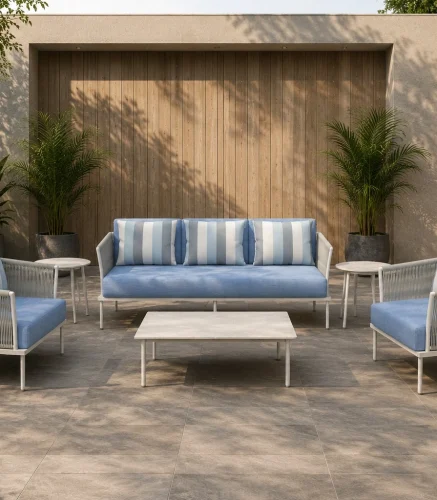
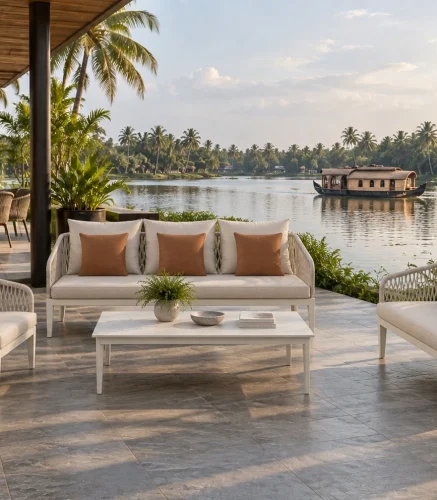
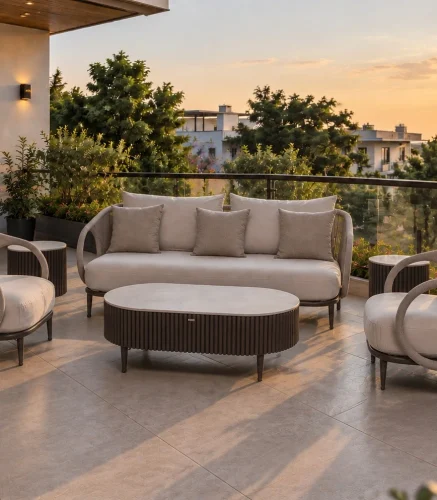
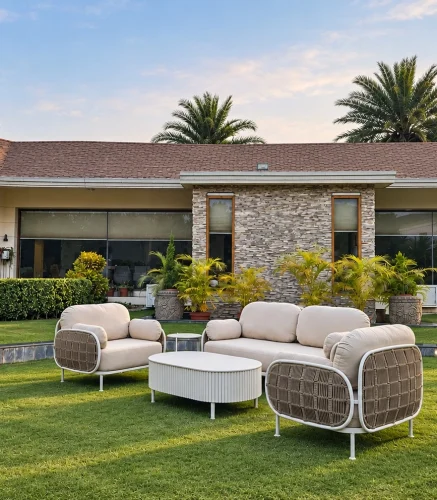
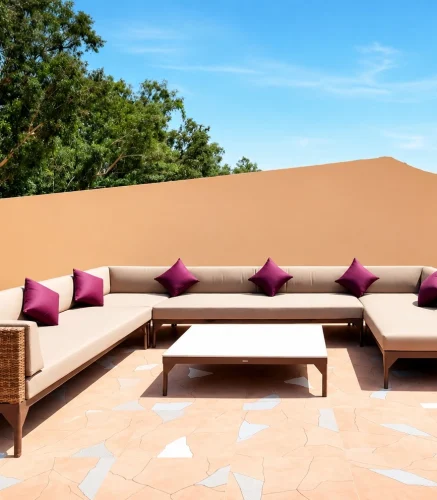
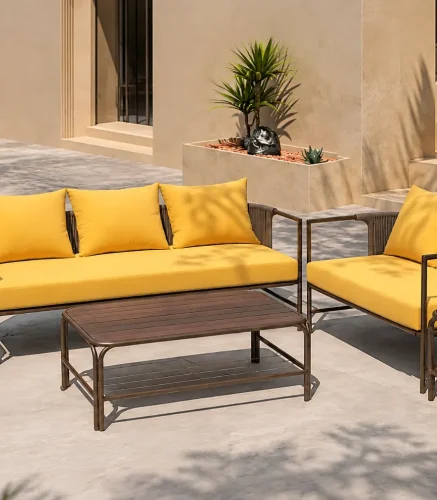
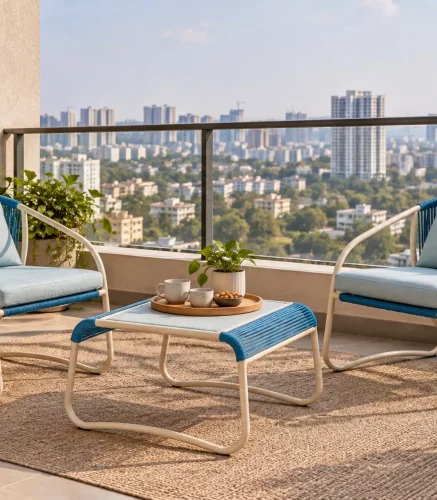
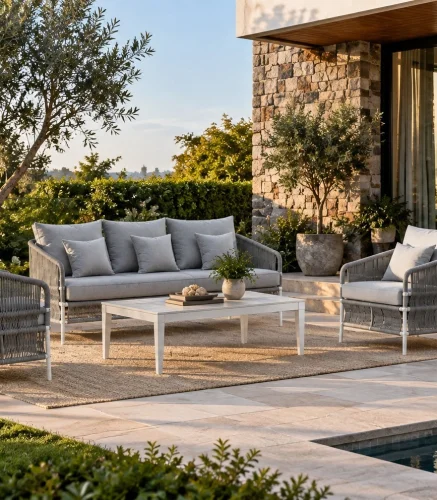
A rooftop lounge in Gurgaon. The client wanted something that felt like a leather club chair, but built for outside. Architects hear this request often. It's also the request that quietly wrecks outdoor projects. Leather looks rich in a showroom. But Indian sun and monsoon spray crack, peel, and stain it within months. Leather-Free Outdoor Furniture closes that gap. It performs on day one thousand the way it photographed on day one.
At GEBE, going leather-free isn't a compromise on richness. It's a deliberate choice. True luxury shouldn't depend on a material that can't survive its own space. Every GEBE piece delivers leather's warmth and comfort, without leather's outdoor weaknesses.
What Leather-Free Outdoor Furniture Actually Means
This isn't just furniture that skips animal hide. It's a full rethink of comfort and texture for sun, rain, and salt air. Traditional leather is biological. So it behaves like one: it absorbs moisture, dries out under UV light, and grows mildew in humid conditions. No surface treatment can fix this. The weakness lives inside the material itself.
GEBE uses advanced technical textiles, marine-grade metals, and closed-cell foams instead. These materials resist moisture; they don't just repel it. As a result, the furniture holds its shape, colour, and comfort across seasons, not just for one photoshoot. This philosophy extends GEBE's wider promise: Performance Luxury treats beauty and durability as one requirement, not two.
The Real Problem With Leather Outdoors
Manufacturers never built leather for the outdoors. That distinction matters more than most spec sheets admit. Genuine leather is porous, so it absorbs humidity from the air long before rain touches it. Once moisture sits inside the fibres, mildew and odour follow fast. In coastal or monsoon-heavy regions, this process speeds up.
Sunlight compounds the problem. UV rays dry out leather's natural oils, causing it to stiffen, crack, and fade unevenly across a sofa. Meanwhile, daily temperature swings expand and contract the material, which weakens stitching over time. A leather daybed on an open terrace often shows damage before its first anniversary. So the appeal of leather indoors becomes a liability outdoors. Designers who specify it often field the complaints months later.
How Humidity and UV Exposure Compound the Damage
In coastal or hill-station projects, this problem intensifies. Salt-laden air breaks down leather's protective coatings. Meanwhile, altitude and hill humidity create condensation cycles that indoor-grade materials can't handle. So a small crack in one season becomes a full reupholstering job within two or three.
The Materials Behind GEBE's Approach
GEBE replaces leather with materials chosen for how they age, not just how they look at delivery. Solution-dyed outdoor fabrics carry pigment through the entire fibre. So colour never sits on a surface waiting to peel or fade. These fabrics also breathe, which stops the trapped moisture that makes leather mildew in the first place.
GEBE builds frames from marine-grade aluminium and finishes them with deep powder coating that resists corrosion in salty, humid air. Leather-wrapped frames rely on stitched seams that loosen with weather cycling; GEBE's aluminium structures hold their form indefinitely instead.
The result feels layered and tactile, much like leather. Yet you can hose it down, leave it in the rain, or park it in direct sun without consequence. Explore the full GEBE collections to see this material system across sofas, loungers, and daybeds.
Why the Frame Matters as Much as the Fabric
A leather-free approach only works when every component matches the same durability standard. For instance, a technical fabric on a rust-prone frame still fails within a season, just differently. That's why GEBE treats the frame, fabric, and foam as one integrated system, not three separate purchasing decisions.
Why Architects and Hospitality Brands Choose Leather-Free Outdoor Furniture
Architects specifying private residences increasingly request this approach. It removes an entire category of maintenance conversations from the handover meeting. Clients no longer need warnings about covering cushions before rain or avoiding direct sun. The furniture simply does its job instead.
For farmhouses and weekend homes, this matters even more. Owners who visit occasionally can't maintain leather upholstery between visits, so an unattended piece deteriorates fast without regular conditioning. A leather-free build removes that dependency. The furniture holds its character even through weeks of neglect.
Hotels, Resorts, and Commercial Spaces
Hospitality projects face the same challenge at scale. A resort pool deck sees hundreds of guests, constant sun, and frequent cleaning. All of that punishes leather faster than residential use ever would. So hotel procurement teams increasingly treat leather-free specification as a requirement, not a preference. Guest-facing furniture failure is costly and visible. GEBE's hospitality solutions meet exactly this demand. They supply resorts and hotel groups with pieces that hold their finish through daily commercial use.
Leather-Free Outdoor Furniture and the Serviceable Promise
Choosing these materials also supports GEBE's broader commitment: Serviceable Not Disposable. Damaged leather upholstery is hard and costly to repair; it often needs full reupholstering instead of a simple fix. GEBE's technical fabrics and modular cushion systems work differently. Technicians can usually repair, recover, or replace them piece by piece.
So a GEBE sofa never needs to go simply because one cushion wears out first. Our team can service individual components through GEBE's care guidelines and service request support. That extends the piece's working life by years. This mirrors a broader industry shift. Furniture makers increasingly treat responsible material sourcing as a design philosophy, not a marketing footnote. A recent overview of sustainable leather alternatives highlights this shift too. Similarly, research into the resource intensity of traditional leather production explains the trend. Material-conscious alternatives are gaining ground across furniture categories, not just fashion, as this analysis shows.
How to Style Leather-Free Outdoor Seating at Home
Styling leather-free pieces isn't different from styling any premium collection. The visual language of stitched panels, deep cushioning, and tailored silhouettes stays intact. For a warm, lived-in look, pair GEBE's sofa sets with natural stone flooring and earthy textiles. This combination echoes a leather lounge's richness while staying entirely weatherproof.
For poolside or coastal settings, lighter neutral tones with brushed aluminium accents create a cleaner, more contemporary read. Meanwhile, farmhouse and hill-station projects often benefit from deeper tones that recall leather's traditional patina, without any of the upkeep. GEBE's material science guide looks closer at these fabric and frame combinations. The brand's maintenance-free luxury philosophy also explains how this styling holds up with minimal seasonal care.
Performance as Luxury
GEBE's guiding principle stays consistent across every collection: "Designed in Europe. Proven in Dubai. Crafted for India." The brand tests every fabric, frame, and finish against intense UV exposure, humidity, and coastal air. Each must perform before it reaches a residential terrace or a five-star pool deck. Leather-Free Outdoor Furniture simply applies this philosophy to one of the most demanding material categories in outdoor design. Industry data from Grand View Research continues to show growing global demand for durable, design-led outdoor furniture. This confirms that performance and aesthetics no longer compete.
Frequently Asked Questions
Does Leather-Free Outdoor Furniture look as rich as real leather?
Yes. GEBE's technical fabrics and tailored cushion detailing replicate leather's depth and tactility while resisting moisture, UV exposure, and staining.
Why does leather-free outdoor furniture suit Indian climates better?
Genuine leather absorbs humidity and degrades fast under strong UV exposure and monsoon conditions. Leather-free materials resist these stresses by design.
Is Leather-Free Outdoor Furniture harder to maintain?
No, it's significantly easier. You can wipe most GEBE pieces clean or hose them down lightly; leather needs regular conditioning and protection from moisture instead.
Can this leather-free approach work in hotels and resorts?
Yes. Its resistance to heavy use, sun exposure, and frequent cleaning makes Leather-Free Outdoor Furniture well suited to hospitality environments with high guest turnover.
The GEBE Pledge
Outdoor furniture should never force a choice between how a space looks and how long it lasts. Leather-Free Outdoor Furniture reflects GEBE's belief: comfort, richness, and durability belong together, not on opposite ends of a spec sheet.
Explore the full range of GEBE products to see how this collection brings lasting comfort to your next residential, farmhouse, or hospitality project. Or get in touch with the GEBE team to discuss material specifications for your space.