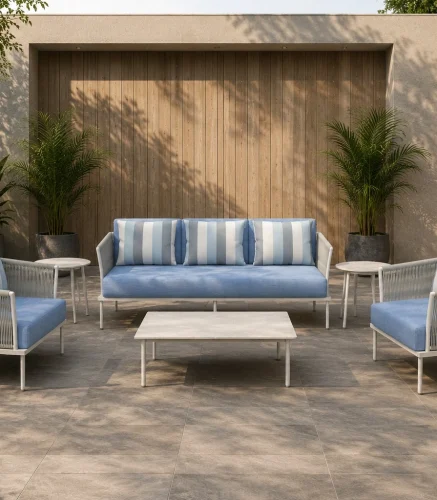
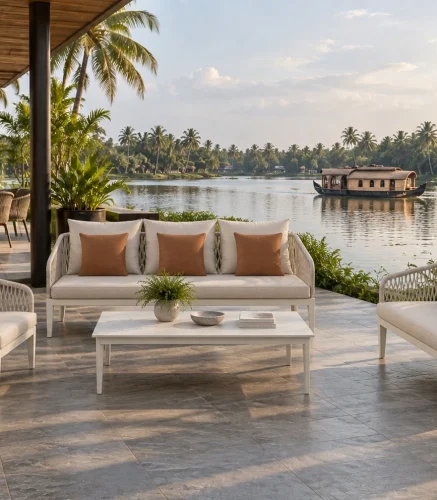
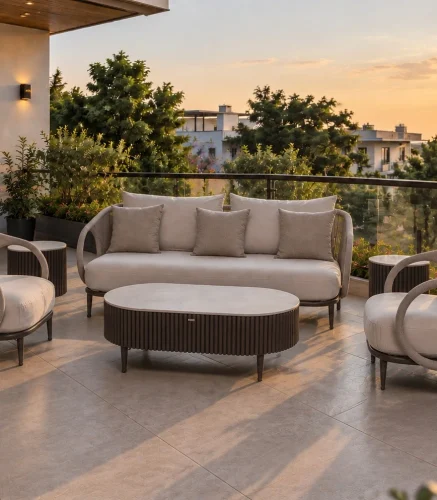
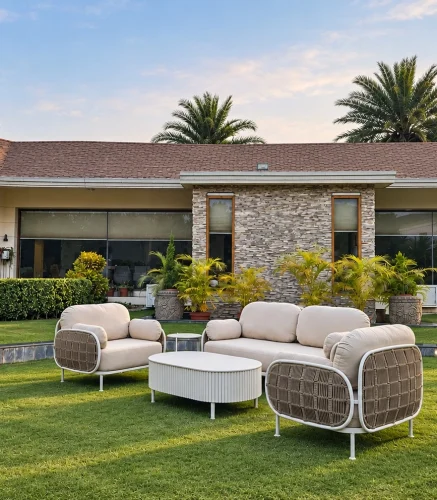
It is a Saturday evening in Dehradun. Clouds that were nowhere in sight an hour ago have opened up over a rooftop cafe on Rajpur Road. Half the tables were set out in the open to catch the pleasant evening air. Now staff are shuffling guests indoors while they scramble to dry cushions and reposition chairs under the narrow covered section. The kitchen is not struggling that evening. The seating plan is. This is exactly the kind of failure a solid outdoor dining furniture layout is meant to prevent. Too many tables sat in a zone with no real weather cover. The aisle to the sheltered corner was too narrow for two people to pass. Meanwhile, the covered seats that could have absorbed the overflow were already full.
This is the kind of problem that shows up only after someone has already bought and placed the furniture. Getting the layout right, especially in a city where weather can shift within a single afternoon, saves both money and service headaches later.
Outdoor Dining Furniture Layout: Start With Covers Per Square Foot
Restaurant consultants and hospitality designers typically plan outdoor seating using a covers per square foot approach. This works better than simply counting how many tables fit. A comfortable casual dining layout usually allows twelve to fifteen square feet per cover. A more relaxed lounge or cafe style area, meanwhile, can use fifteen to twenty square feet per cover for a less crowded feel. Industry seating benchmarks suggest roughly twelve square feet per person for intermediate restaurant layouts. For more spacious layouts, that figure rises to around fifteen square feet. Fine dining outdoor terraces often need even more space per seat. That's because larger place settings, wider chairs, and generous walking room are part of the experience.
Before selecting furniture, measure the usable outdoor area. Subtract planters, structural columns, bar counters, and circulation paths first. Then divide the remaining space using this benchmark. This single step prevents a common mistake: ordering furniture first and discovering later that it does not fit comfortably.
Table Shapes and Sizes That Work Outdoors
Square and rectangular two seater and four seater tables are easier to combine into larger groups when a big party arrives. Notably, this matters for restaurants with unpredictable group sizes. Round tables look elegant and work well in lounge areas. However, they are harder to push together. In addition, they often waste corner space in tightly packed outdoor sections.
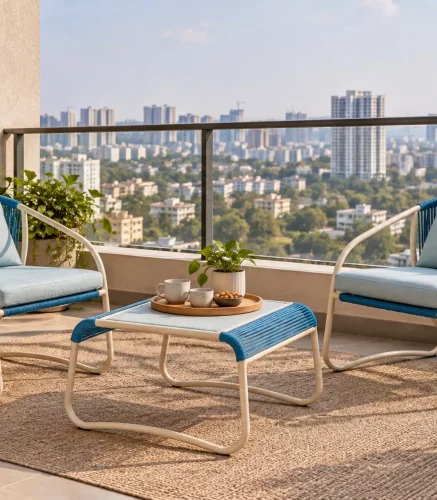
For rooftop and terrace restaurants, a mix works best. Aim for mostly two and four seater square tables you can join together. Add a few round tables in a dedicated lounge corner. Finally, include one or two larger communal tables near the bar or a scenic view, since these tend to see the highest turnover during peak hours.
Aisle Widths in Your Outdoor Dining Furniture Layout
A minimum aisle width of thirty six inches works for primary walkways where servers carry trays. Meanwhile, near kitchen pass points, host stands, and high traffic corners, widen that to forty two or forty eight inches. Secondary aisles between table clusters can be narrower, around twenty four to thirty inches. Anything tighter, however, makes service slow and uncomfortable for guests reaching the restroom or exit.
Walk the space with the actual furniture dimensions, not just floor plan drawings. Indeed, this catches problems that paper measurements often miss. For instance, chairs often stick out further than expected once someone pulls them back to sit down.
Weather and Shade Considerations for Dehradun's Climate
Dehradun sits at the base of the Himalayan foothills, which keeps it cooler than the plains for most of the year. However, its proximity to the hills also brings some of the heaviest monsoon rainfall in north India. That's according to the India Meteorological Department's Meteorological Centre in Dehradun. Restaurants along stretches such as Rajpur Road and Sahastradhara Road often face sudden weather shifts within the same afternoon. Bright sun can turn into an unannounced downpour within minutes. Consequently, covered or partially sheltered outdoor seating tends to work more reliably than fully open terraces.
Many properties here also sit on sloped or terraced plots, typical of foothill construction. Furniture that is easy to reposition across split level seating areas therefore works better than large, fixed dining sets. In addition, the surrounding forest cover raises ambient humidity. As a result, frames and fabrics that resist mildew and moisture absorption hold up noticeably longer than materials chosen mainly for looks.
Cafes near the Doon valley's tree lined avenues also deal with falling leaves and pollen during certain seasons. Consequently, wipeable, easy to clean surfaces tend to work better than porous materials that trap organic debris in their finish.
Choosing Materials That Survive Daily Restaurant Use in Dehradun
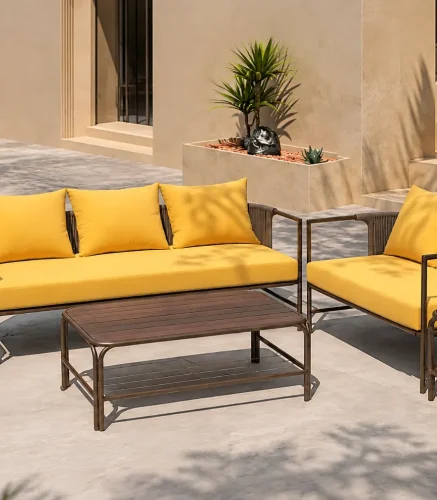
Restaurant furniture faces a different kind of stress than residential furniture. For example, chairs get dragged across stone or tile flooring multiple times a day. Similarly, tables get wiped down repeatedly with cleaning chemicals, and cushions absorb spilled drinks and sunscreen. Powder coated aluminium frames tend to hold up well against this kind of daily wear. Indeed, they resist rust and are relatively easy to touch up if scratched. Fabric choices matter just as much for any outdoor dining furniture layout. Specifically, choose upholstery you can wipe clean or remove for washing. This saves significant staff time compared to fabrics that need special cleaning products.
Brands positioned around performance materials, such as GEBE Luxe, work with hospitality operators on frame and upholstery combinations. GEBE designs these for repeated commercial use, not occasional home use. This is a useful distinction to raise with any supplier during the buying conversation.
Flexible Outdoor Dining Furniture Layout for Peak and Off-Peak Hours
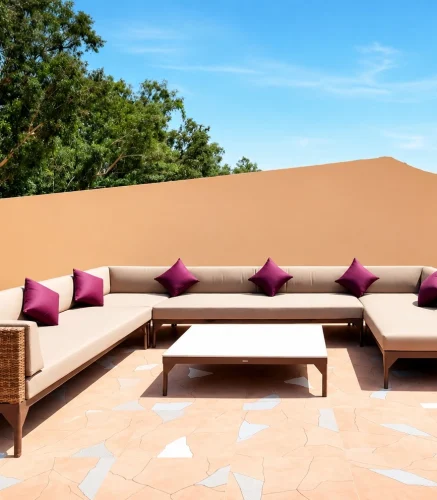
The best outdoor restaurant layouts change with demand. Lightweight, stackable chairs and tables on locking castors let staff reconfigure a terrace between a quiet weekday lunch and a packed Friday dinner. This needs no extra storage space. Modular sofa sets, meanwhile, let staff push them together or separate them. This gives restaurants flexibility between an intimate two person setup and a larger group booking, using the same furniture pieces.
Planning tools that let designers test different configurations before committing to an order, such as GEBE Luxe's space planner tool, help hospitality teams compare layouts and covers per square foot. Best of all, they do this without physically moving furniture around an empty space.
Hospitality teams can also explore GEBE Outdoor projects to see how hotels, resorts, and other commercial spaces have used outdoor furniture. For project requirements, specifications, or layout discussions, visit the GEBE Contact Us page.
Frequently Asked Questions
How many square feet does one outdoor restaurant seat typically need?
Most casual outdoor dining layouts plan for twelve to fifteen square feet per seat. Lounge style or fine dining seating, however, often needs fifteen to twenty five square feet per seat to remain comfortable.
What aisle width should a restaurant leave between outdoor tables?
Primary service aisles should generally be at least thirty six inches wide. High traffic paths near the kitchen or entrance work better closer to forty two or forty eight inches.
Is round or square table seating better for restaurant patios?
Square and rectangular tables are generally more flexible, since you can combine them for larger groups. Round tables, in contrast, suit dedicated lounge corners where flexibility matters less than ambience.
How can restaurants protect outdoor furniture during India's monsoon season?
Frames with strong corrosion resistance help, as do cushions that let water drain rather than absorb it. A plan to move or cover furniture quickly during sudden rain reduces monsoon related damage further.
Do rooftop restaurants need different furniture than ground floor outdoor seating?
Rooftop spaces usually face stronger wind and more direct sun. Therefore, heavier, wind stable furniture bases and fade resistant fabrics matter more than on sheltered ground floor patios.
Does outdoor restaurant furniture need extra weather protection in Dehradun?
Yes, generally more than in drier plains cities. Specifically, Dehradun's mix of heavy monsoon rainfall and humid, forest adjacent air makes moisture and mildew resistance a bigger priority. Ultimately, any solid outdoor dining furniture layout here also needs easy to move furniture for sudden weather changes.