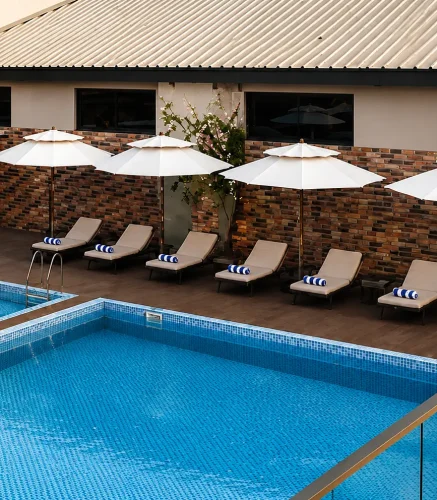
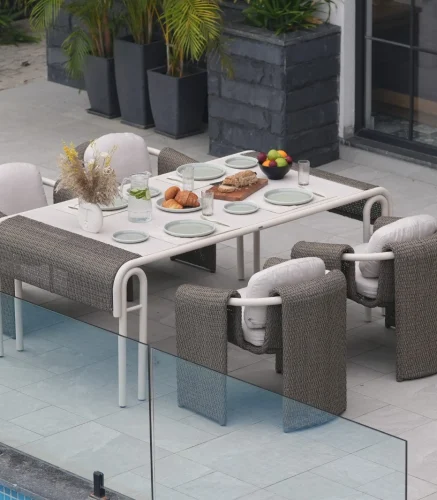
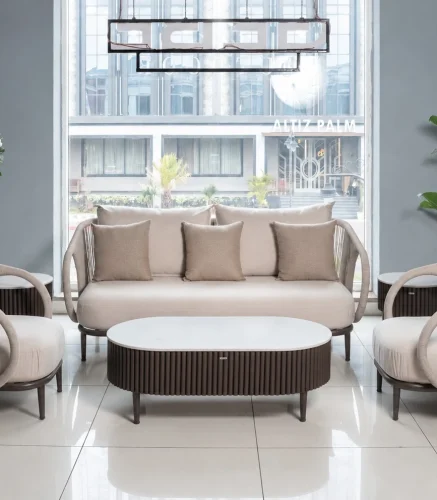
A farmhouse outside Hisar built on an acre of land faces a different outdoor furniture problem than a fourth floor balcony in Gurugram. No neighbouring tower cuts the afternoon sun here. No housing society wall blocks the wind coming off open fields, and no elevator limits how large a dining set can be. For families in towns like Hisar, Karnal, Rohtak, Panipat and Sirsa, outdoor furniture for Haryana farmhouses starts with a completely different set of questions than it does in a metro apartment.
Over the last decade, a growing number of Delhi NCR families have built weekend farmhouses or larger independent homes in these secondary Haryana towns. This is partly for more space. It is also partly to stay closer to ancestral land and family. These properties usually come with generous lawns and covered verandas. Some also have a small orchard, kitchen garden or private pool. That scale of outdoor space is an opportunity. However, it also means furniture has to hold up to a harsher, more exposed version of North Indian weather than a shaded urban balcony sees.
Outdoor Furniture for Haryana Farmhouses: Understanding the Climate
Haryana sits firmly in the semi arid climate band of North India. Summers, roughly from April to June, bring long stretches of dry heat. Temperatures regularly cross 40 degrees Celsius. In addition, dust laden winds sweep in from the surrounding agricultural belt. Farmhouses are usually low rise structures on open plots, so there is little natural shade compared to a dense urban block. Consequently, furniture placed on a lawn or open deck receives many more hours of direct UV exposure through the day.
The monsoon, from July to September, runs shorter and often more erratic here than in coastal or hill regions. However, when it arrives it can bring sudden heavy showers. Strong gusty winds often come with them, which matters for anything lightweight sitting on an open lawn. Winters bring a different challenge. Dense fog and cold, damp mornings arrive from late December into January. These keep outdoor cushions and fabrics moist for longer stretches than in drier months.
Dust is arguably the most constant factor. Specifically, agricultural land nearby means fine soil particles travel easily. They settle into woven textures, cushion seams and joinery. Furniture with simple, wipeable surfaces and closed weave upholstery stays easier to keep presentable between deep cleans than pieces with deep grooves or loosely woven fabric.
Outdoor Furniture for Haryana Farmhouses: Material Choices
Powder coated aluminium frames make a practical starting point for farmhouse settings. First, they resist rust. They also stay relatively light to reposition around a large lawn, and simply wipe down after a dusty afternoon. Solid wood pieces, teak in particular, can also work well on covered verandas. There, they stay protected from constant direct sun and rain. Wood left in full open exposure on a lawn, however, will weather. It also needs more frequent oiling to maintain its colour.
For upholstery, closed weave, solution dyed fabrics resist fading. They hold their colour better through Haryana's long summer sun than lower grade printed fabrics. Cushion fillings that let water drain through, rather than holding moisture, are worth asking about specifically. This matters especially given any chance of monsoon showers catching furniture before someone can move it indoors. Trapped moisture combined with dust, after all, is what usually leads to mildew smells in outdoor seating.
Groundwater in parts of Haryana tends to be hard. Consequently, if a lawn sprinkler or irrigation line runs near a seating area, mineral deposits from spray drift can leave white residue on dark fabrics or metal finishes over time. Positioning furniture away from the direct throw of sprinklers avoids this issue. Choosing finishes that clean easily with a damp cloth helps too.
Planning Layout for Outdoor Furniture for Haryana Farmhouses on Large Open Plots
A compact balcony has a fixed footprint that dictates the furniture plan. Farmhouse layouts, in contrast, usually need zoning. A shaded veranda close to the house works well for everyday morning tea or informal seating. It stays protected from both sun and light rain. A more open lawn area, further from the building, suits occasional larger gatherings. Specifically, it can hold a dining set or lounge grouping that is only set up seasonally.
Wind is worth planning for on open plots in a way that rarely matters on a sheltered balcony. Lightweight chairs, loose cushions and umbrellas can shift or tip over easily. Notably, this simply does not happen in a wind protected courtyard. Heavier bases and umbrella anchors help. Choosing pieces designed to sit low and stable on grass matters too, as a practical consideration rather than an aesthetic one.
If a pergola, gazebo or covered pavilion is part of the plan, decide furniture placement alongside that structure early. Covered zones, after all, can use lighter fabrics and more delicate finishes. Fully open zones, meanwhile, need the more weather resistant end of the material range.
Design Direction for Farmhouse Living
Farmhouses often extend a family's indoor living room sensibility outdoors. As a result, many homeowners look for outdoor seating that echoes the comfort and proportions of indoor furniture, rather than looking purely functional. This is part of a broader shift internationally. Design houses such as Roche Bobois and B&B Italia have spent years bringing indoor design language into their outdoor collections. Labels like Dedon and Caneline, meanwhile, have helped popularise handwoven, rope style outdoor seating that looks as considered as an indoor sofa. Longstanding commercial names such as Brown Jordan have also shaped how brands specify deep seating and lounge furniture for large outdoor spaces over the decades. That same instinct is a useful reference point when planning a farmhouse seating area: treat the lawn or veranda as an extension of the living room, not a separate outdoor category.
GEBE Luxe has completed project work in the region, including a private residence in Hisar. The brand generally approaches farmhouse and independent home projects with performance materials. These materials handle sun, dust and occasional monsoon exposure without needing constant upkeep. Readers looking to explore outdoor furniture options can refer to the GEBE Luxe store locations page for current showroom information.
Frequently Asked Questions
Is aluminium or wood better for a farmhouse lawn in Haryana?
Aluminium generally suits open, fully exposed lawn areas better. It resists rust and wipes clean of dust easily. Wood, in contrast, tends to perform best on a covered veranda, where it stays shielded from constant direct sun and rain.
How often does outdoor furniture need to be cleaned in a dusty farmhouse setting?
A light wipe down or brush off every few days during the dry summer and dust season keeps buildup manageable. A more thorough clean of fabric and joinery roughly once a month rounds out the routine. Do it sooner after a dust storm or heavy shower.
Can outdoor furniture be left out through Haryana's winter fog?
Weather resistant frames can generally stay outdoors. Cushions and soft furnishings, however, are better stored or covered during the foggy, damp weeks of late December and January. This avoids prolonged moisture exposure.
What furniture works best for a covered veranda versus an open lawn?
Covered verandas can use slightly more delicate fabrics and finishes, since they stay protected from direct sun and rain. Open lawn furniture, therefore, should prioritise UV resistant materials, wipeable surfaces and stable, wind resistant bases.
Does GEBE Luxe have a store in Haryana?
GEBE Luxe's confirmed headquarters and manufacturing unit sit in Ludhiana, Punjab. Readers can check the GEBE Luxe store locations page for the current list of showrooms and partner stores.